
 Login
LoginRecumbent Bike vs Upright Bike: Which Fits Your Home and Routine Better?
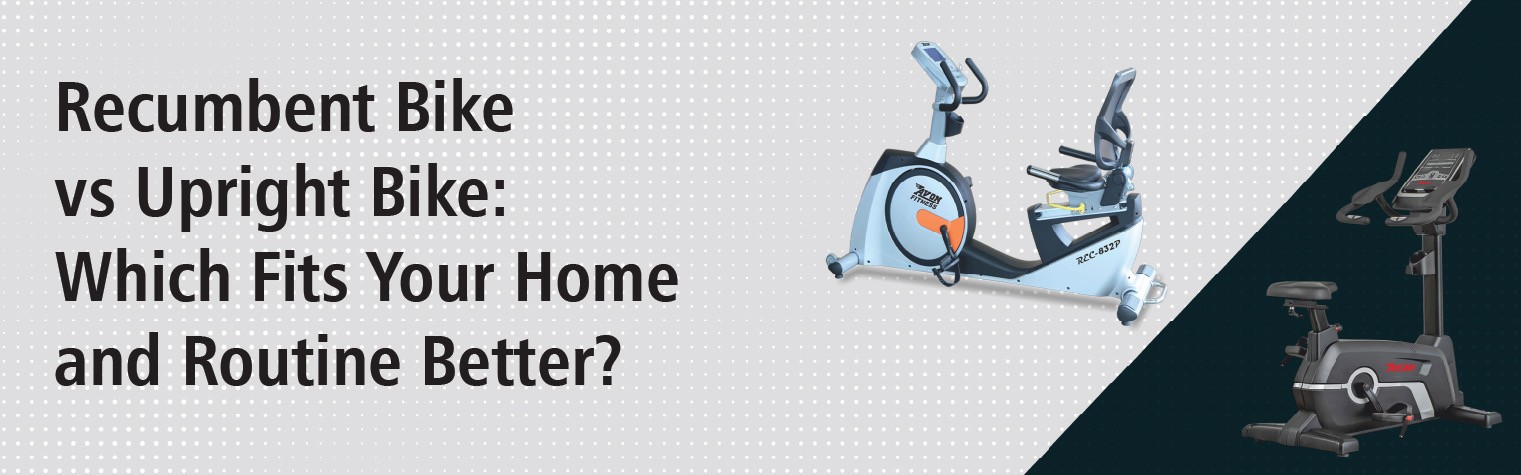
This question rarely comes from beginners. It usually comes from someone who already knows they want a bike and just doesn’t want to regret the choice.
A recumbent bike and an upright bike both handle cardio. That part is settled. What changes is how your body feels after a week of use and whether the machine blends into your routine or keeps reminding you it’s there.
The Recumbent Bike in Real Homes
The first time someone sits on a recumbent bike, the reaction is almost always physical, not verbal. The back support is noticeable. The hips relax. There’s no sense of balancing yourself.
For anyone with mild lower back tightness or knee sensitivity, that supported position feels practical. It reduces negotiation. You don’t spend the first five minutes adjusting your posture.
Longer sessions tend to happen naturally here. The movement is steady. There’s no compression through the spine. It becomes easier to cycle without thinking about form.
It does occupy space. The extended frame doesn’t disappear into a corner. In larger rooms that barely matters. In compact spaces, it becomes part of the decision.
The Upright Bike Experience
An upright bike changes the tone immediately. You sit vertically. There’s no backrest to lean into. Your core stays engaged even at moderate resistance.
For some people, that’s the appeal. It feels closer to outdoor cycling. More alert. Slightly more demanding without increasing intensity.
Its footprint is smaller, which makes it easier to position in apartments or shared rooms. It feels less permanent in space.
Workouts on an upright bike often feel deliberate. You get on, complete the session, and step off. There’s less of the relaxed, lean-back rhythm you see with a recumbent bike.
What Actually Decides It
Very few buyers choose based on resistance levels.
They choose based on comfort they don’t have to think about. Or on how much space they’re willing to commit.
Someone easing into routine often gravitates toward the recumbent bike because it removes friction. Someone who already trains consistently may prefer the upright posture because it feels familiar.
Neither option is superior. The better one is the one that doesn’t irritate you after day three.
Why Build Quality Matters More Than Type
Regardless of which model you choose, stability shapes the experience. Smooth resistance. No wobble. A seat that holds position.
Those details determine whether a bike feels trustworthy.
Avon Fitness Machines produces domestic recumbent and upright bikes built around that principle. Stable frames and consistent pedalling mechanics matter more than oversized displays. When equipment feels solid, it stays in use.
At the point of comparison, many buyers search for GYM equipment stores near me to try both. Sitting on each type for a few minutes usually makes the preference obvious.
The Practical Way to Look at It
If leaning back into support feels like relief, the recumbent bike likely fits your routine.
If you prefer an upright posture and a compact presence in the room, the upright bike may integrate more naturally.
The decision becomes simple once you picture it in your space and in your week.
That’s usually enough.
